

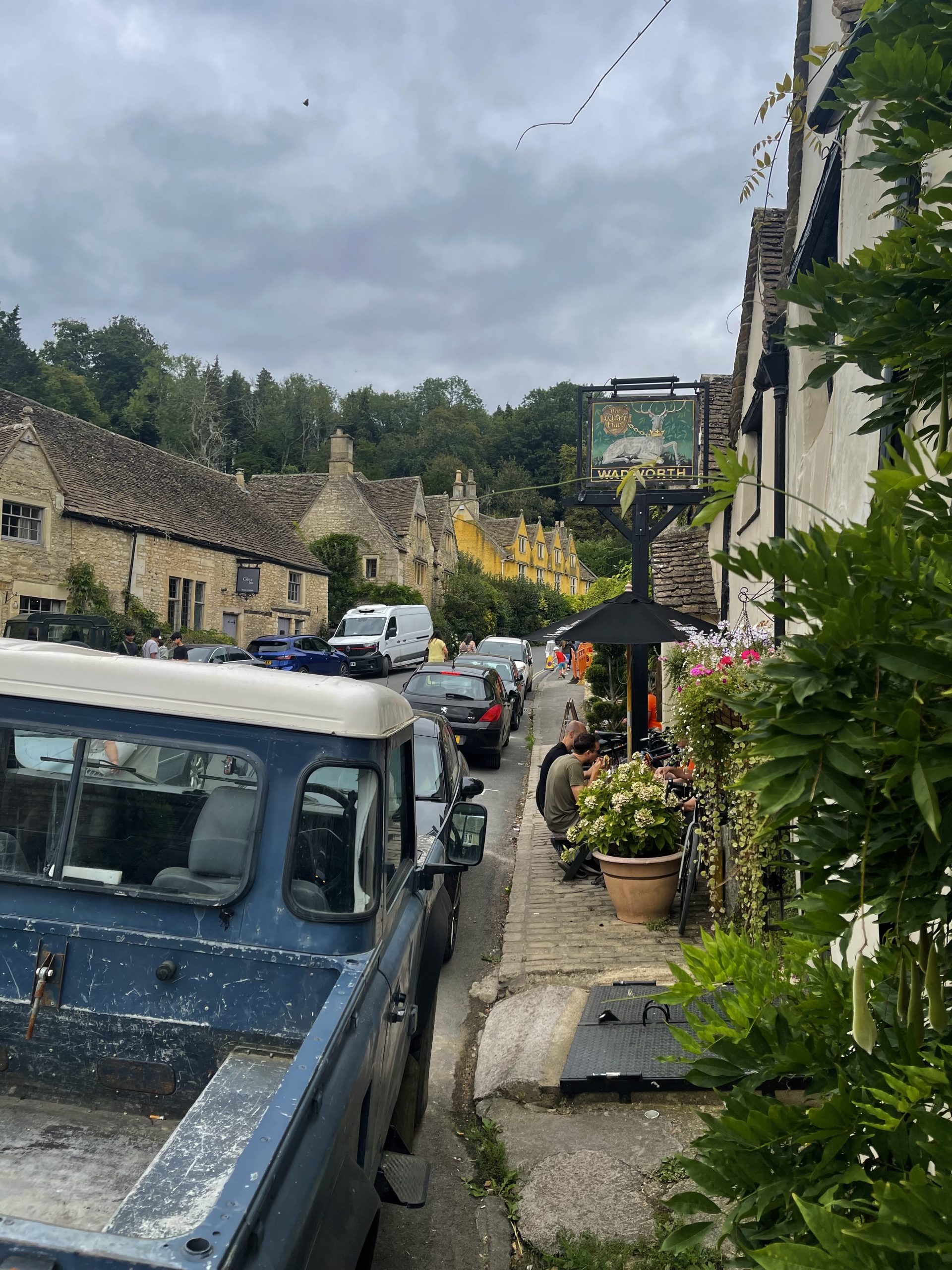
The Cotswolds are often described as timeless, but their quiet beauty is the product of thousands of years of change. Long before the honey-coloured villages appeared, people settled these hills for practical reasons: good grazing, limestone for building, and defensible ridges. Evidence of Neolithic burial mounds, Bronze Age sites, and Iron Age hillforts shows that life here has always been closely tied to the land.
The medieval period transformed the Cotswolds more than any other era. The region became famous for its extraordinarily fine wool, raised from large flocks of shaggy “Cotswold Lion” sheep. The wealth generated from wool exported across Europe paid for grand churches, handsome market squares, and manor houses that still define the landscape today. When people say the Cotswolds were “built on wool,” they’re speaking almost literally: trade shaped both the economy and the architecture.
For a time, the market towns thrived. Merchants grew powerful, fairs drew traders from far away, and local communities enjoyed a rare level of prosperity. But as industrialization spread in the 17th and 18th centuries, the textile mills of northern England overtook traditional producers. Many Cotswold mills closed, young workers left, and the region slipped into a slower, quieter rhythm.
That decline, ironically, preserved the Cotswolds. Without constant redevelopment, many medieval and early modern buildings simply remained as they were. Villages that might have been rebuilt in brick or expanded with factories stayed largely intact, creating the “frozen in time” atmosphere visitors find so enchanting today.
In the 19th century, artists, writers, and architects rediscovered the area and saw it as an antidote to industrial life. Figures linked to the Arts and Crafts Movement, including William Morris, championed craftsmanship, restoration, and traditional stone building. Their romantic admiration helped shape how the world sees the Cotswolds: as the epitome of rural English beauty.
Modern conservation later stepped in to protect what history had left behind. When the Cotswolds were designated an Area of Outstanding Natural Beauty, planning rules began to safeguard dry-stone walls, rolling pastures, and those famous golden cottages. Yet the region isn’t a museum. Farming continues, villages evolve, and daily life carries on just at a gentler pace.
Walk through places like Stow-on-the-Wold, Tetbury, or Lower Slaughter and you’re seeing layers of all this history at once: prehistoric settlement, medieval prosperity, centuries of quiet decline, Victorian nostalgia, and modern protection. That rich layering is what makes the Cotswolds feel both deeply authentic and irresistibly picturesque. It is a landscape shaped by people, economics, and time, still living and breathing today.